
Bitcoin is often associated with buying, holding, and selling an asset for a potential profit. But many cryptocurrency users looking for ways to earn interest on Bitcoin also ask an important question: how to generate yield without selling their BTC?
The answer depends on what you mean by “Bitcoin interest.” Bitcoin itself does not work like a traditional savings account that automatically pays interest to people who hold it. To potentially earn interest on Bitcoin, users generally need to use a separate lending, rewards, or investment product offered by a cryptocurrency platform.
It is also important to distinguish between Bitcoin itself and a Bitcoin Trust ETF. For example, the current iShares Bitcoin Trust ETF (IBIT) is designed to provide exposure to Bitcoin’s price, but its current product information lists a distribution frequency of “None.” That means holding the trust is not the same thing as receiving regular Bitcoin interest.
This guide explains how Bitcoin interest can work, the main methods available, how returns are calculated, and the risks you should understand before depositing Bitcoin into a yield-generating product.
Can You Earn Interest on Bitcoin?
Yes, it is possible to earn a return on Bitcoin through certain financial and cryptocurrency products, but Bitcoin itself does not automatically generate interest simply because you hold it.
Traditional bank savings accounts pay interest because banks generally use deposited funds within their banking and lending systems. Bitcoin operates differently.
To earn a yield on BTC, you may need to place your Bitcoin into a product where the platform or another party uses the assets for activities such as lending or other investment strategies.
The interest you receive therefore comes from the activity of the company or protocol handling the assets, not from the Bitcoin network simply rewarding holders.
This distinction is important because it introduces additional risks beyond Bitcoin’s normal price volatility.

What Is Bitcoin Interest?
Bitcoin interest generally refers to a return paid to someone looking to earn interest on Bitcoin by depositing or lending through a particular financial product.
Depending on the platform, the product may use deposited Bitcoin for:
- Lending to borrowers
- Institutional financing
- Liquidity activities
- Other crypto-related investment strategies
- Structured yield products
The exact mechanism varies considerably between platforms.
The SEC’s Investor Bulletin on crypto-asset interest-bearing accounts explains that some companies may use deposited crypto assets in lending programs and other activities to generate the returns paid to customers. It also warns that these products do not have the same protections as traditional bank deposits.
Therefore, an advertised Bitcoin interest rate should never be viewed as equivalent to a guaranteed bank savings rate.
How to Earn Interest on Bitcoin
There are several broad methods people may consider when looking for Bitcoin yield.
1. Use a Crypto Interest Account
Some cryptocurrency platforms offer dedicated products designed to help users earn interest on Bitcoin by depositing crypto assets to potentially receive a yield.
The basic process can look like this:
- Create an account with an eligible platform.
- Complete any required verification.
- Deposit Bitcoin.
- Select an available earning or interest product.
- Agree to the applicable terms.
- Receive the stated rewards according to the product rules.
The interest rate offered when you earn interest on Bitcoin may be fixed for a specific period or variable depending on the product.
However, availability differs by country, platform, asset, and regulatory requirements.
Before depositing BTC, carefully check how the platform generates the advertised yield and what happens to your Bitcoin after you deposit it.
2. Bitcoin Lending
Bitcoin lending serves as another popular method when users want to earn interest on Bitcoin through structured lending arrangements. When you earn interest on Bitcoin via lending, the borrower pays interest, and some of that return is passed to you.
In a lending arrangement designed to earn interest on Bitcoin, your BTC may be supplied to a borrower or used through a lending platform. The borrower pays interest, and some of that interest may be passed to the person providing the Bitcoin.
For example, suppose you deposit 0.1 BTC into a lending product designed to earn interest on Bitcoin with an illustrative annual rate of 3%.
A simplified calculation would be:
0.1 BTC × 3% = 0.003 BTC
That would represent approximately 0.003 BTC in interest over a full year if the rate remained unchanged and the product’s terms allowed that exact calculation.
This is only an example. Actual returns can vary, and fees, rate changes, lock-up periods, and platform conditions can affect the final result.
The key risk is that you are relying on the borrower and/or platform to return your assets.
3. Use Crypto Earn Products
Some crypto platforms offer specialized products commonly described as “Earn,” “Savings,” or similar options that help individuals earn interest on Bitcoin.
These specialized products designed to earn interest on Bitcoin can have different structures. For example, one might allow flexible withdrawals, while another requires locking your BTC.
Potential factors include:
- Annual percentage yield
- Lock-up period
- Withdrawal rules
- Minimum deposit
- Maximum deposit
- Platform fees
- Geographic availability
- Asset custody
- Counterparty risk
Do not compare products designed to earn interest on Bitcoin only by their advertised APY.
A higher rate may come with higher risks, longer lock-up periods, or more complicated terms.
4. Consider DeFi-Based Bitcoin Yield
Another area people explore when attempting to earn interest on Bitcoin is decentralized finance, commonly called DeFi.
DeFi applications used to earn interest on Bitcoin can provide lending, liquidity, and other financial services using blockchain-based smart contracts.
However, Bitcoin’s original network does not function as a general-purpose smart-contract lending platform in the same way as some other blockchain ecosystems.
As a result, earning yield through DeFi may involve tokenized, wrapped, or otherwise represented versions of Bitcoin on another network.
This introduces additional risks.
You may be exposed not only to Bitcoin’s price but also to:
- Smart-contract risk
- Bridge risk
- Protocol risk
- Tokenization risk
- Liquidity risk
- Network fees
- Platform failure
For beginners, it is important to understand exactly what asset they are receiving and where that asset is held before using a DeFi yield strategy.
Does a Bitcoin Trust Pay Interest?
This is an important question because the phrase “Bitcoin Trust” can refer to an investment product rather than a Bitcoin savings account.
The iShares Bitcoin Trust ETF (IBIT), for example, is designed to provide exposure to Bitcoin’s price through an exchange-traded product. BlackRock’s current product information lists its distribution frequency as None.
That means investors should not assume that buying shares of a Bitcoin Trust ETF automatically produces interest payments.
The potential return from such a product can instead come primarily from changes in the market price of the shares and Bitcoin exposure, minus applicable fees and other costs.
This is fundamentally different from depositing actual Bitcoin into an interest-bearing lending or rewards product.
Bitcoin Trust vs. Bitcoin Interest Account
Understanding the difference can prevent confusion.
| Feature | Bitcoin Trust ETF | Bitcoin Interest Product |
| Main purpose | Bitcoin price exposure | Potential yield on deposited crypto |
| Typical asset | ETF shares | BTC or another crypto asset |
| Interest payments | Not necessarily | May be offered |
| Price risk | Yes | Yes |
| Counterparty/platform risk | Depends on structure | Often significant |
| Custody | Managed by the product structure | Depends on provider |
| Return source | Primarily asset-price movement | Interest/rewards plus possible asset-price movement |
For example, IBIT is designed to track Bitcoin’s performance rather than function as a conventional interest-bearing savings account.
How Is Bitcoin Interest Calculated?
Bitcoin interest is commonly expressed as an APR or APY.
APR means Annual Percentage Rate, while APY generally takes compounding into account.
A simple APR calculation can be represented as:
Interest = Principal × Annual Rate × Time
For example, if you deposit 0.5 BTC into a hypothetical product offering a 4% annual rate for one year:
0.5 BTC × 4% = 0.02 BTC
The theoretical interest would be 0.02 BTC.
However, real products may calculate rewards differently.
The rate could change, rewards could be paid in another token, fees could apply, or the product could have conditions that affect the final amount.
Always read the platform’s specific calculation method.

What Are the Risks of Earning Interest on Bitcoin?
Earning interest can sound attractive, but it comes with additional risks.
Bitcoin Price Risk
Even if you successfully earn interest on Bitcoin, Bitcoin’s market price can still decline.
For example, earning 0.01 BTC does not guarantee that the dollar value of your overall position will increase.
When you try to earn interest on Bitcoin, you need to consider both the number of BTC you receive and the market value of BTC.
Platform Risk
If you place Bitcoin with a centralized company to earn interest on Bitcoin, you depend on that company to safeguard and return your assets.
The SEC warns that crypto interest-bearing accounts do not have the same protections as traditional bank deposits and can involve risks including company failure, fraud, hacking, illiquidity, and regulatory changes.
Lending Risk
If a platform lends your Bitcoin to borrowers, there is a risk that a borrower may fail to repay.
The company handling products to earn interest on Bitcoin may have risk-management systems, but that does not eliminate counterparty risk.
Liquidity Risk
Some products you use to earn interest on Bitcoin may restrict withdrawals for a specific period.
If Bitcoin’s price falls sharply while your funds are locked, you may not be able to immediately move or sell the assets.
Regulatory Risk
Crypto regulations governing how you earn interest on Bitcoin can change across countries and jurisdictions.
A product available in one country may not be available to users elsewhere.
Always check the current rules that apply to your location and the specific service.
Is Earning Interest on Bitcoin Safe?
There is no single answer because the level of risk depends on the product.
A Bitcoin interest product should not automatically be treated like a bank savings account.
The SEC specifically states that crypto interest-bearing accounts do not provide the same protections as bank or credit-union deposits.
Before depositing Bitcoin, investigate:
- Who operates the product?
- How is the yield generated?
- Is the rate fixed or variable?
- Can you withdraw at any time?
- Is there a lock-up period?
- Who controls the assets?
- What happens if the platform fails?
- What fees apply?
- What protections exist?
- Is the product available legally in your jurisdiction?
These questions are more important than simply finding the highest advertised interest rate.
How to Choose a Bitcoin Interest Product
If you are comparing Bitcoin yield products, consider the following factors.
Interest Rate
Compare the advertised APR or APY, but do not use the rate as your only criterion.
Withdrawal Conditions
Understand whether your BTC is flexible or locked.
Security
Research the company’s custody arrangements, security history, and operational practices.
Transparency
Look for clear information about how the company generates yield.
Fees
A high advertised rate can be reduced by withdrawal fees, service fees, spreads, or other costs.
Reputation and Regulatory Position
Research the provider and understand which laws and regulations apply to the service.
Can You Earn Interest on Bitcoin Without Selling It?
Potentially, yes.
Some interest-bearing products allow users to deposit Bitcoin and receive rewards while maintaining exposure to BTC.
However, “not selling” does not necessarily mean “keeping full control of your Bitcoin.”
When you transfer BTC to a third-party platform, the platform may take custody of the asset or use it under the terms of the agreement.
Therefore, read the custody and lending terms carefully.
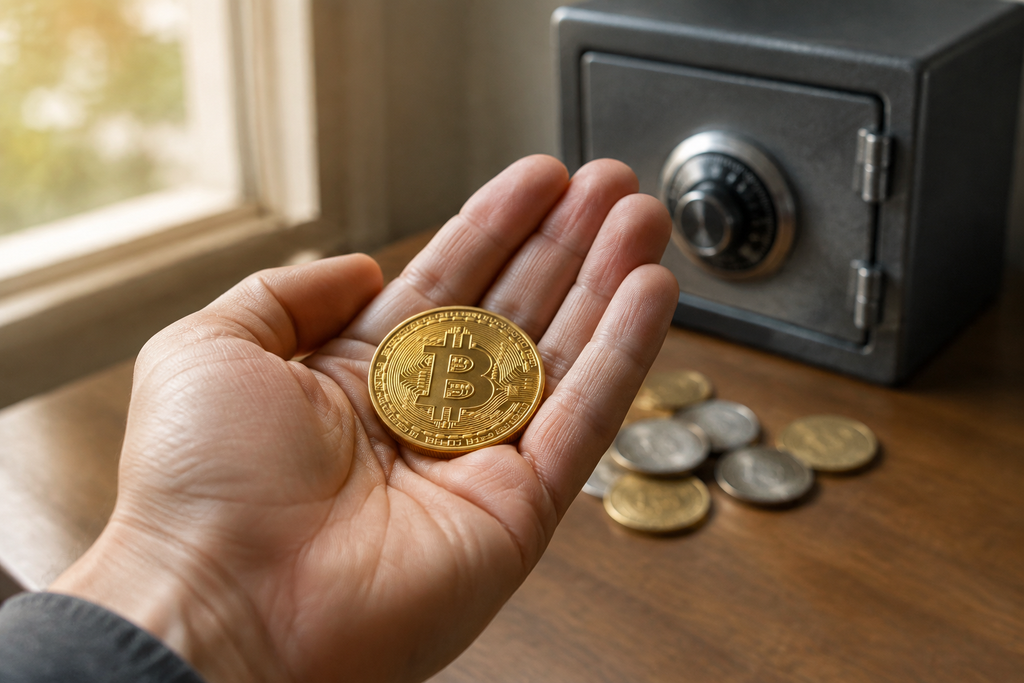
Bitcoin Interest vs. Bitcoin Price Growth
These are two different sources of potential return.
Imagine you hold 1 BTC.
If Bitcoin’s market price rises, the value of your holdings may increase even if you earn no interest.
If you place that BTC into an interest-bearing product, you may receive additional BTC, but the price of Bitcoin could still decline.
For example:
- Starting balance: 1 BTC
- Interest earned: 0.03 BTC
- Ending balance: 1.03 BTC
You have more BTC, but that does not automatically mean your investment has increased in value in your local currency.
This is why both asset quantity and asset price matter.
Common Mistakes to Avoid
Chasing the Highest APY
An unusually high rate when you earn interest on Bitcoin may involve higher risk. Investigate how the return is generated before depositing funds.
Assuming Interest Means Guaranteed Profit
Interest does not protect you against Bitcoin price declines or platform losses.
Ignoring Lock-Up Periods
Make sure you understand when your Bitcoin can be withdrawn.
Trusting Unverified Platforms
Avoid sending Bitcoin to unknown websites promoted through unsolicited messages or unrealistic advertisements.
Forgetting About Taxes
Interest, rewards, lending income, and crypto transactions can have tax implications depending on your jurisdiction. Keep accurate records and obtain appropriate professional advice where necessary.
Final Thoughts
If you are searching for how to earn interest on Bitcoin, the first thing to understand is that simply holding Bitcoin does not automatically generate interest. When evaluating any platform to earn interest on Bitcoin, remember that the first rule is understanding that simply holding crypto does not automatically generate returns.
Potential Bitcoin yield generally comes through separate products such as lending programs, crypto interest accounts, or other structured services. These products can potentially increase the amount of BTC you hold, but they also introduce additional risks.
It is also important not to confuse a Bitcoin Trust ETF with an interest-bearing Bitcoin account. The current iShares Bitcoin Trust ETF, for example, is designed to provide exposure to Bitcoin’s price and currently lists no distributions.
Crypto interest products can involve lending, custody, liquidity, counterparty, security, and regulatory risks. The SEC has specifically warned that crypto interest-bearing accounts are not equivalent to traditional bank deposits and do not provide the same protections.
Before using any Bitcoin yield product, understand how the return is generated, who controls your assets, what happens if the provider fails, whether withdrawals are restricted, and what fees apply.
The most important rule is simple: do not choose a Bitcoin interest product solely because it advertises a high APY. Understand the underlying risks first.
Frequently Asked Questions
Can Bitcoin earn interest?
Bitcoin itself does not automatically pay interest to holders. Some third-party lending, rewards, or yield products may offer returns for depositing Bitcoin, but these products involve additional risks.
Does the Bitcoin Trust ETF pay interest?
A Bitcoin Trust ETF should not automatically be considered an interest-bearing account. The current iShares Bitcoin Trust ETF (IBIT) lists its distribution frequency as “None.”
How much interest can I earn on Bitcoin?
The amount depends on the product, rate, investment period, fees, and terms. Rates can change, and a higher advertised yield generally should not be interpreted as a guaranteed profit.
Is Bitcoin lending safe?
Bitcoin lending carries risks including borrower default, platform failure, liquidity problems, hacking, and regulatory changes. The level of risk depends on the specific provider and product.
Can I earn interest without selling my Bitcoin?
Some products allow you to deposit BTC and receive rewards without converting the BTC into fiat currency. However, you may transfer custody or control of your Bitcoin to a third party, depending on the product.
Is Bitcoin interest taxable?
The tax treatment of Bitcoin interest, lending rewards, and cryptocurrency transactions varies by country. Keep detailed records and consult a qualified tax professional for advice specific to your situation.
This content is for educational purposes only, not financial advice