
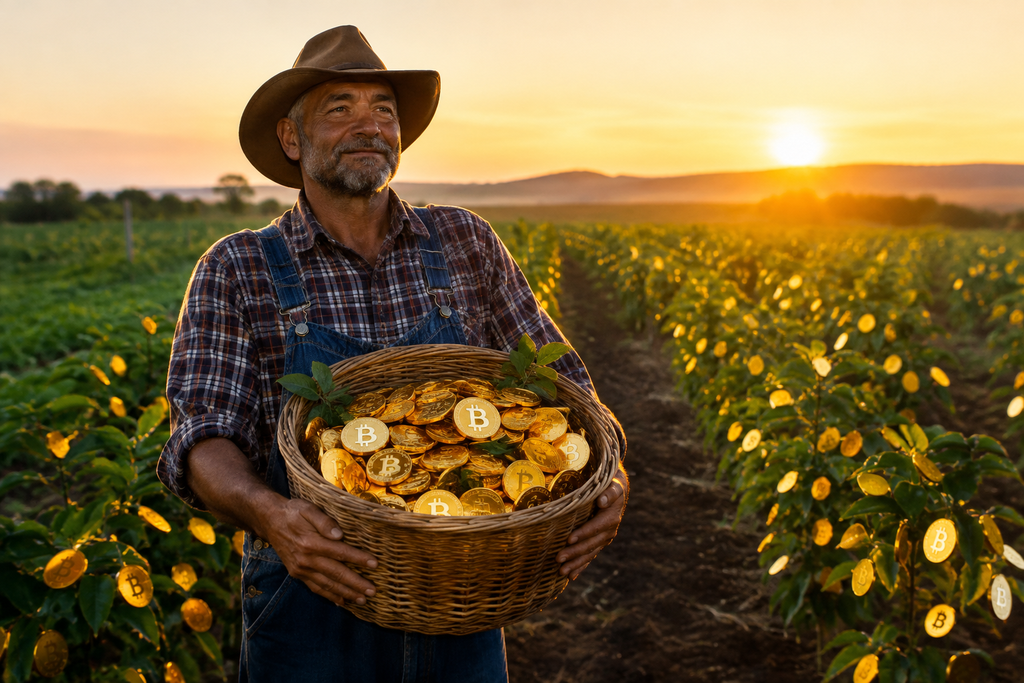
If you are exploring cryptocurrency and decentralized finance (DeFi), you have probably come across the term crypto yield farming. Yield farming has become an important part of the DeFi ecosystem because it allows crypto holders to potentially earn rewards by putting their digital assets to work.
But what exactly is crypto yield farming? How does it work, where does the yield come from, and what risks should beginners understand before using a yield-farming strategy?
In simple terms, crypto yield farming is a DeFi strategy where users provide or allocate cryptocurrency to decentralized protocols to earn rewards or yield. Effective crypto yield farming requires understanding where returns come from to decentralized protocols to earn rewards or yield. Depending on the protocol, those rewards may come from trading fees, lending interest, liquidity incentives, or protocol tokens. Coinbase describes yield farming as a way of allocating digital assets to DeFi protocols in exchange for rewards.
This guide explains the crypto yield farming definition, how yield farming works, common strategies, potential benefits, major risks, and important factors to consider as a beginner.
What Is Crypto Yield Farming?
Crypto yield farming is the practice of using cryptocurrency in decentralized finance protocols to generate potential rewards or yield.
Instead of simply holding crypto in a wallet, a user can supply assets to a DeFi application. The deposited assets may then be used for activities such as decentralized trading, lending, or other financial services.
For example, a user could provide liquidity to a decentralized exchange. Other users can then trade against that liquidity, while the liquidity provider may receive a portion of the trading fees.
In other situations, users can supply crypto to a decentralized lending market. Borrowers use the available liquidity, and suppliers may earn interest. Aave, for example, allows users to supply supported assets to liquidity pools and earn interest based on the current market supply rate.
The important thing to understand is that yield farming does not mean guaranteed profit. Crypto prices, reward rates, liquidity, transaction costs, and protocol conditions can all change.

How Does Crypto Yield Farming Work?
The exact process depends on the DeFi protocol and strategy, but the general concept of successful crypto yield farming can be explained in several steps.
1. Choose a DeFi Protocol
First, a user chooses a decentralized protocol that offers a yield opportunity.
This could be:
- A decentralized exchange
- A liquidity pool
- A crypto lending protocol
- A yield vault
- A staking-related application
- Another DeFi protocol offering incentives
Every protocol has its own smart contracts, supported assets, fees, reward mechanisms, and risks.
2. Connect a Crypto Wallet
Many DeFi applications allow users to interact directly with a self-custodial wallet.
Instead of creating a traditional account and depositing funds with a centralized company, users can connect a compatible blockchain wallet and approve transactions.
For example, Aave describes its protocol as non-custodial and allows users to interact with its smart contracts through self-custodial wallets.
3. Deposit or Supply Crypto
The user then supplies eligible crypto assets to the selected protocol.
The assets could be deposited into a lending market, liquidity pool, vault, or another DeFi strategy.
For a liquidity pool, users may need to provide two assets in a particular ratio. For example, a pool could require ETH and a stablecoin.
4. Earn Rewards
Once the assets are supplied, the user may begin earning rewards.
Depending on the strategy, the yield can come from:
- Trading fees
- Borrowing interest
- Protocol incentives
- Governance tokens
- Staking rewards
- Other DeFi mechanisms
The source of the yield is particularly important because a high advertised percentage does not automatically mean the strategy is sustainable.
5. Reinvest the Rewards
Some yield-farming strategies allow users to reinvest their rewards.
This is known as compounding. Instead of withdrawing earned rewards, they are added to the strategy so that future rewards can potentially be generated on a larger balance.
Some automated vaults are designed to manage parts of this process. For example, Aave’s documentation describes yield-bearing vault structures that can manage underlying yield strategies.
What Is a Liquidity Pool in Yield Farming?
Liquidity pools are one of the most important concepts when it comes to understanding crypto yield farming.
A liquidity pool is a collection of digital assets held by a smart contract. These assets can provide liquidity for decentralized applications such as decentralized exchanges.
For example, imagine an ETH/USDC liquidity pool. Users contribute ETH and USDC to the pool, allowing other traders to exchange one asset for another.
Liquidity providers may receive a portion of the fees generated by trades.
This system allows decentralized exchanges to operate using pools of liquidity rather than relying on a traditional centralized order book.
However, providing liquidity can expose users to additional risks, including impermanent loss, which occurs when the relative prices of assets in a liquidity pool change.

What Is Impermanent Loss?
Impermanent loss is one of the most important risks to understand before participating in liquidity-based yield farming.
It can happen when the price relationship between assets in a liquidity pool changes after you deposit them.
For example, suppose you provide ETH and USDC to a liquidity pool. If ETH’s price changes significantly relative to USDC, the pool’s automated market-making mechanism can change the quantity of each asset in your position.
As a result, your liquidity position may be worth less than it would have been if you had simply held the assets separately.
The trading fees and other rewards you earn may offset some or all of this difference, but there is no guarantee that they will.
Crypto Yield Farming vs Staking
Modern crypto yield farming generally involves using assets within DeFi protocols to generate potential rewards., but they work differently.
Staking generally involves committing or delegating assets to support a proof-of-stake blockchain network. Participants may receive staking rewards for helping secure the network.
Yield farming generally involves using assets within DeFi protocols to generate potential rewards.
For example:
- Staking may support blockchain security.
- Yield farming may provide liquidity to a DeFi application.
- Staking rewards may come from the blockchain’s reward mechanism.
- Yield-farming rewards may come from trading fees, lending activity, or protocol incentives.
Some DeFi strategies can combine staking-related assets with lending or liquidity strategies, which makes the overall structure more complicated.
Common Crypto Yield Farming Strategies
There are several ways people participate in crypto yield farming to maximize their passive earnings.
Liquidity Providing
Liquidity providing involves supplying assets to a liquidity pool.
The user may receive a portion of trading fees and, depending on the protocol, additional incentives.
This strategy can offer potential rewards but also introduces risks such as impermanent loss and smart-contract risk.
DeFi Lending
Another approach is supplying crypto assets to a decentralized lending protocol.
Aave is one example of a decentralized liquidity protocol where suppliers provide assets and earn interest. Its current documentation states that supply rates change according to factors including borrowing utilization and governance parameters.
This means the yield is generally dynamic rather than permanently fixed.
Yield Vaults
Yield vaults can automate certain DeFi strategies.
Instead of manually moving assets between multiple protocols, a vault can manage an underlying strategy according to its design.
This may simplify the user experience, but it does not remove the underlying risks.
Multi-Protocol Strategies
Advanced yield farmers may combine multiple DeFi applications.
For example, a user could supply assets to one protocol, receive a token representing the position, and then use that token in another strategy.
This can potentially increase the number of reward sources, but it also increases complexity and can introduce additional smart-contract, liquidity, and protocol risks.
What Is APY in Crypto Yield Farming?
APY means Annual Percentage Yield.
It is commonly used by crypto platforms in crypto yield farming to display an annualized return that may account for compounding.
However, beginners should not assume that an advertised APY will remain unchanged for a full year.
Yield can change because of:
- Market conditions
- Liquidity levels
- Borrowing demand
- Trading activity
- Token prices
- Reward emissions
- Protocol changes
- User participation
For example, Aave states that supply interest rates are dynamic and influenced by utilization. When borrowing demand changes, the rate paid to suppliers can also change.
Therefore, a high APY shown today should not automatically be treated as a guaranteed long-term return.
Benefits of Crypto Yield Farming
Crypto yield farming can offer several potential benefits.
Potential Passive Income
One major attraction is the ability to potentially earn additional rewards from existing crypto assets.
Instead of keeping assets completely idle, users can deploy them into DeFi applications.
Participation in DeFi
Yield farming allows users to participate directly in decentralized financial applications.
They can provide liquidity, support lending markets, or interact with other blockchain-based financial products.
Multiple Sources of Yield
Depending on the strategy, users may receive income from trading fees, lending interest, incentives, or other reward mechanisms.
Self-Custody
Some DeFi protocols operate through self-custodial wallets, allowing users to interact directly with smart contracts.
However, self-custody also means users have greater responsibility for wallet security and transaction approvals.
Risks of Crypto Yield Farming
Yield farming can involve significant risks, and understanding them is essential.
Smart Contract Risk
DeFi applications rely on smart contracts. If a contract contains a vulnerability or is exploited, users may lose funds.
Coinbase identifies smart-contract flaws as one of the risks associated with yield farming.
Impermanent Loss
Liquidity providers can experience impermanent loss when the relative prices of assets in a pool change significantly.
This is particularly important when providing liquidity to volatile token pairs.
Crypto Price Volatility
The value of the deposited assets and rewards can change significantly.
Even if you receive more tokens, the overall dollar value of your position can decline if the underlying assets fall in price.
Variable Rewards
Yield rates and incentives can change over time.
A strategy offering a high reward today may offer a much lower reward later.
Transaction Fees
Blockchain transaction fees can reduce your overall return.
This is especially important for smaller positions or strategies that require frequent transactions.
Protocol Risk
A DeFi protocol can have economic, governance, liquidity, or operational risks.
Users should understand where their yield comes from instead of selecting a strategy solely because it advertises a high APY.
Is Crypto Yield Farming Safe?
There is no completely risk-free crypto yield-farming strategy.
The level of risk depends on factors such as the protocol, blockchain, smart contracts, assets, liquidity pool design, reward mechanism, and market conditions.
Before using a yield-farming strategy, consider:
- How the protocol generates yield
- Whether the smart contracts have been audited
- The liquidity available
- The volatility of the assets
- Potential impermanent loss
- Withdrawal conditions
- Transaction fees
- Reward-token economics
- Wallet and private-key security
- Protocol and governance risks
A high yield should not automatically be considered better. It can sometimes indicate that a strategy carries greater risk or relies heavily on temporary incentives.
Simple Crypto Yield Farming Example
Consider a hypothetical ETH/USDC liquidity pool.
You provide ETH and USDC to the pool. Other users then use the pool to trade between ETH and USDC.
If the pool generates trading fees, you may receive a share of those fees based on your participation.
The protocol could also provide additional token incentives.
However, if ETH experiences a major price movement relative to USDC, your liquidity position may experience impermanent loss.
This simple example demonstrates why yield farming involves both potential rewards and potential risks.
How to Start Yield Farming as a Beginner
If you are new to DeFi, start by learning the basic concepts before depositing funds.
First, understand how crypto wallets and blockchain transactions work.
Next, research the protocol’s official documentation. Learn how the yield is generated and what assets are involved.
Then check the fees, withdrawal conditions, reward structure, and major risks.
If you decide to participate, avoid committing funds you cannot afford to lose. It is also important to protect your wallet, never share your seed phrase or private keys, and carefully review every transaction and token approval.
Finally, monitor the strategy regularly. Yield farming is not necessarily a completely passive activity because rates, rewards, asset prices, and protocol conditions can change.
Final Thoughts
Ultimately, crypto yield farming is a DeFi strategy that allows users to put their digital assets to work in decentralized protocols in decentralized protocols in an attempt to earn rewards or yield.
It can involve liquidity pools, decentralized lending, trading fees, protocol incentives, yield vaults, and other DeFi strategies. The exact process depends on the protocol and the assets being used.
For beginners, the most important thing is to understand that yield farming is not guaranteed passive income. High APYs can change, crypto prices can fall, liquidity conditions can shift, and smart-contract vulnerabilities can create significant risks.
Before choosing a yield-farming strategy, look beyond the advertised APY. Understand where the yield comes from, what risks you are taking, what fees apply, and how easily you can withdraw your assets.
When approached with proper research and realistic expectations, yield farming can help explain how decentralized finance creates opportunities for crypto holders to participate in on-chain financial markets. However, the potential for rewards always needs to be considered alongside the possibility of losing some or all of the capital involved.
This content is for educational purposes only, not financial advice